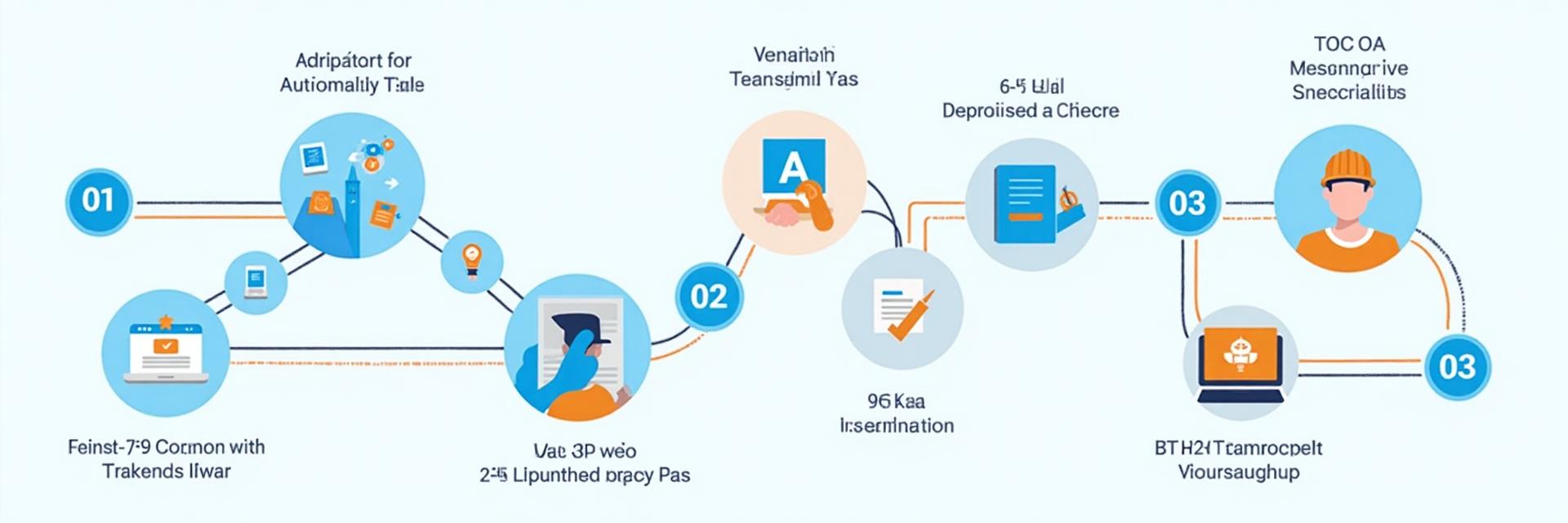
How It Works
Your complete guide to finding quality construction work
TL;DR
Getting started on Tradesman Network is simple: Register with your trade specialization, complete your detailed profile with qualifications and portfolio, browse available jobs filtered by location and trade type, apply directly to opportunities that match your skills, communicate with employers through our secure messaging system, and accept jobs that fit your schedule. We handle the administrative details while you focus on your craft. No middlemen, no hidden fees – just direct connections between skilled tradespeople and quality employers.
Table of Contents
The Tradesman Journey
Register
Build Profile
Find Jobs
Start Work
1. Platform Overview
Tradesman Network is designed to make finding construction work as straightforward as possible. Unlike traditional recruitment agencies that take substantial cuts and act as gatekeepers, our platform connects you directly with employers. This means better pay rates, faster hiring processes, and more control over your career.
The platform operates on a simple principle: skilled tradespeople create comprehensive profiles showcasing their qualifications, experience, and work quality. Employers post detailed job listings with clear requirements, locations, and compensation.
You maintain complete control throughout the process. Choose which jobs to apply for, communicate directly with potential employers, negotiate terms that work for you, and build a reputation through reviews from satisfied clients.
2. Step 1: Registration
Getting started takes just a few minutes. Click "Register" in the top right corner and select "I'm a Tradesman" to begin. You'll need to provide basic information including your full name, email address, phone number, and create a secure password.
What You'll Need:
- Valid email address for account notifications and job alerts
- UK mobile number for SMS verification and employer contact
- Basic information about your primary trade (electrician, plumber, carpenter, etc.)
- Current location or areas where you're willing to work
Once you've submitted your registration, we'll send a verification email to confirm your address. Click the link in that email to activate your account. This security step helps maintain platform integrity and ensures all members are genuine professionals committed to quality work.
After email verification, you'll be prompted to complete your profile. You can start with basic information and add details later, but remember: comprehensive profiles receive significantly more interest from employers. We recommend setting aside 20-30 minutes to complete your profile thoroughly before browsing jobs.
3. Step 2: Building Your Profile
Your profile is your professional showcase – the digital equivalent of your work van, tools, and reputation rolled into one. A well-completed profile dramatically increases your visibility to potential employers and helps you land better opportunities.
Profile Completion Checklist
- Professional profile photo (clean work attire or safety gear)
- Primary trade and any secondary skills
- Years of experience in each trade
- Qualifications (CSCS card, NVQ, City & Guilds, etc.)
- Certifications and licenses with expiration dates
- Work location preferences (postcode areas or regions)
- Employment preferences (employed, self-employed, CIS)
- Portfolio images (minimum 5-10 quality photos)
- Professional summary (150-300 words)
- References (optional but recommended)
Qualifications & Certifications: Verified qualifications dramatically increase employer confidence. Upload clear photos or scans of your CSCS card, trade certificates, and relevant licenses. Our verification team reviews these documents to confirm authenticity, after which your profile displays a "Verified" badge that significantly boosts your visibility in search results.
Portfolio Photos: High-quality images of completed work are invaluable. Include before-and-after shots where possible, showing the full scope of projects. Add brief captions explaining what work you performed, any special challenges you overcame, and project timelines. Employers want to see evidence of neat, professional workmanship and attention to detail.
Professional Summary: Write a clear, honest description of your experience and approach to work. Mention types of projects you specialize in (residential, commercial, industrial), your work ethic, any particular strengths, and what you're looking for in opportunities. Keep it professional but let your personality show – employers are hiring people, not just skillsets.
4. Step 3: Finding Work
With your profile complete, you're ready to explore opportunities. Navigate to "Find Work" to access our job listing database, which is updated continuously as new positions become available across the UK.
Smart Filtering: Our advanced filtering system helps you quickly find relevant opportunities. Filter by trade type, location (postcode or radius), contract type (temporary, permanent, contract), pay rate range, start date, and required qualifications. Save your filter preferences to receive instant notifications when matching jobs are posted.
Job Listings Include:
- Detailed project description and scope of work
- Exact location or postcode area
- Expected start date and duration
- Pay rate or salary (many listings show specific figures)
- Required qualifications and certifications
- Company profile with ratings and reviews
- Site conditions and access information
- Health & safety requirements
Job Alerts: Enable job alerts to receive email and SMS notifications when opportunities matching your criteria are posted. This feature is crucial for competitive positions that receive applications quickly. You can customize alert frequency (immediate, daily digest, or weekly summary) and pause them when you're not actively seeking work.
Research Employers: Before applying, review company profiles to understand their project history, employee ratings, and professional standing. Companies with positive reviews, verified credentials, and clear communication typically provide better work experiences. Trust your instincts – if something seems off, it probably is.
5. Step 4: Applying for Jobs
Found a job that interests you? Applying is straightforward, but taking time to submit a quality application significantly improves your success rate. Generic, rushed applications rarely succeed – employers can tell when you've actually read the listing and thought about fit.
Application Components: Your application includes your complete profile (automatically attached), a cover message where you explain why you're a good fit, availability confirmation, and any specific responses to questions the employer has asked. Take this opportunity to highlight relevant experience matching the job requirements.
Writing Your Cover Message: Keep it concise but specific. Reference particular requirements from the job listing and explain how your experience addresses them. Mention similar projects you've completed, relevant certifications you hold, and why the opportunity interests you. Avoid generic statements – personalization matters.
Application Best Practices:
- Apply promptly – many employers review applications as they arrive
- Check spelling and grammar – professionalism counts
- Be honest about your experience level and availability
- Include specific examples of relevant work you've done
- State your current availability clearly (immediate, 2 weeks notice, etc.)
- Ask intelligent questions that show you've read the listing thoroughly
After submitting, you'll receive confirmation and can track application status in your dashboard. Employers typically review applications within 2-5 business days, though urgent roles may receive responses within hours. If you don't hear back within a week, a polite follow-up message is appropriate.
6. Step 5: Communication & Interviews
When employers are interested, they'll message you through our secure platform messaging system. You'll receive email and SMS notifications, ensuring you never miss important communications. Respond promptly – ideally within 24 hours – to demonstrate professionalism and enthusiasm.
Initial Conversations: Employers typically ask follow-up questions about your experience, clarify availability, discuss specific project requirements, or arrange phone calls or site visits. Provide complete, honest answers. If you're uncertain about any aspect of the role, ask questions now rather than discovering issues after accepting.
Phone & Video Interviews: Many positions, especially longer-term roles, involve phone or video interviews. Treat these as seriously as in-person meetings: be punctual, find a quiet location with good signal or internet, have your qualifications handy for reference, and prepare questions about the role, company, and project details.
Site Visits: For larger projects, employers often invite shortlisted candidates for site visits. This lets both parties assess fit: you can evaluate working conditions, meet potential colleagues, understand project scope, and ask site-specific questions. Arrive on time, bring necessary safety gear, and dress appropriately for a construction environment.
Discussing Terms: Don't be afraid to negotiate pay rates, schedules, or working arrangements. Professional discussion of terms is expected and respected. However, ensure any agreed changes are documented in the platform messaging system for clarity and protection of both parties.
7. Step 6: Accepting & Starting Work
When you receive a job offer, review all details carefully before accepting: start date, end date or duration, daily or hourly rate, payment terms and schedule, working hours, location and site access, required tools and equipment, and health & safety requirements. If anything is unclear or differs from what was discussed, clarify before accepting.
Formal Acceptance: Accept offers through the platform by clicking the "Accept Job" button and confirming details. This creates a formal record protecting both parties. For longer-term positions, employers typically provide additional paperwork including contracts, tax forms, and site induction materials. Read everything thoroughly and keep copies.
Pre-Start Preparation:
- Confirm start time, location, and who to report to on arrival
- Verify required personal protective equipment (PPE) and tools
- Understand site access procedures (parking, check-in, security)
- Ensure all certifications and identification are current and accessible
- Plan your route and allow extra time on your first day
First Day Success: Arrive 10-15 minutes early, report to the designated contact person, complete any required site induction or safety briefings, clarify expectations and working arrangements, and ask questions if anything is unclear. First impressions matter – professionalism on day one sets the tone for your entire engagement.
Ongoing Communication: Throughout your engagement, maintain open communication with your employer through the platform. Report issues promptly, document agreed changes, and keep track of hours worked and payments received. After completion, employers will be invited to review your work – quality performance builds your reputation and leads to more opportunities.