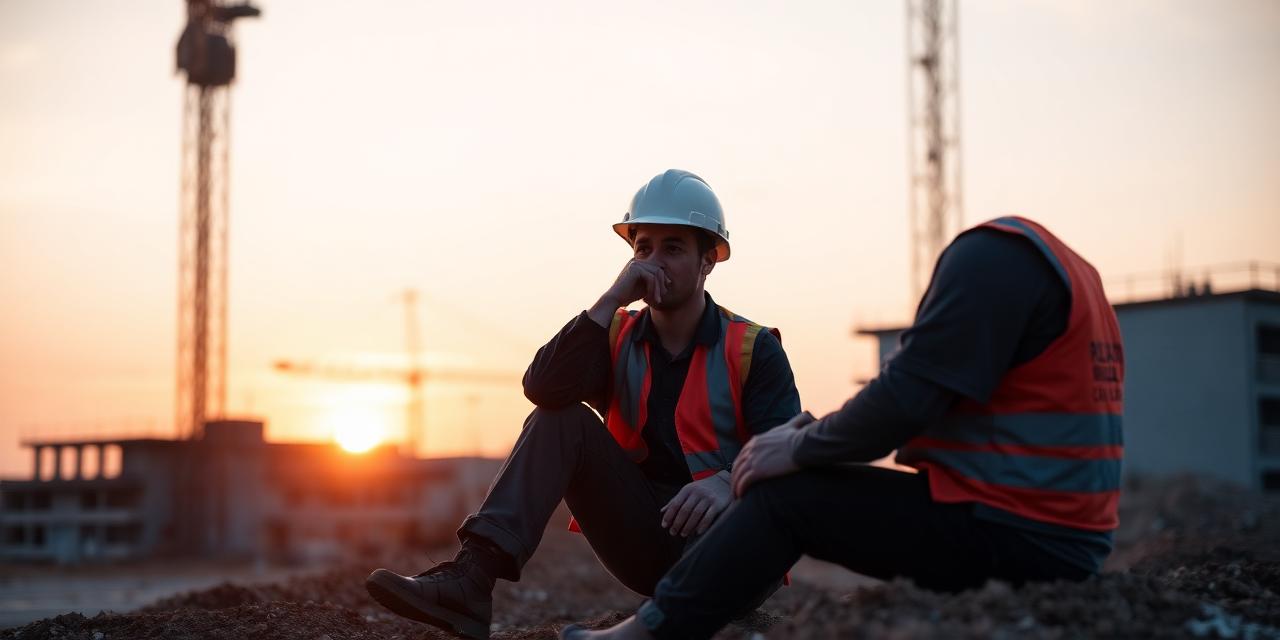
Mental Health in Construction: Breaking the Silence
TL;DR
Suicide rates among male construction workers in England are significantly higher than the male average, according to Office for National Statistics (ONS) analysis of suicide by occupation. Charities such as Mates in Mind and the Lighthouse Construction Industry Charity report that long hours, financial pressure, transient work and a "macho" culture combine to make construction one of the highest-risk sectors for poor mental health. Free, confidential support is available 24/7 through the Lighthouse helpline (0345 605 1956) and Samaritans (116 123). Employers have legal duties under HSWA 1974 and the Equality Act 2010.
Table of Contents
1. The Scale of the Problem
The Office for National Statistics (ONS) publishes regular analyses of suicide by occupation. In its most recent multi-year study covering male suicides in England, ONS found that male construction workers — particularly those in skilled and elementary trade roles — had suicide rates significantly above the male average for the working-age population.
Building on that ONS work, charity Mates in Mind highlights that around two construction workers a day take their own lives in the UK — a figure repeatedly cited in industry briefings, including by the Construction Industry Council and the Building Engineering Services Association.
HSE's wider workplace ill-health statistics show stress, depression and anxiety as a fast-growing share of work-related illness in construction. Although physical injury still dominates HSE's enforcement activity, mental ill health is now formally recognised in HSE's strategy as a core risk to manage.
These numbers are uncomfortable. But they are also the reason charities, contractors and clients have invested heavily in support — and the reason this guide exists. Talking openly about the data is the first step towards changing it.
2. Why Construction is High-Risk
There is no single cause, but several factors recur in research from the Chartered Institute of Building (CIOB), Mates in Mind and the Lighthouse Construction Industry Charity. Long hours, often away from home, with little control over the schedule. Financial pressure from late payments and unpredictable work. A workforce that is overwhelmingly male, in a culture that has historically equated talking about feelings with weakness.
CIOB's wellbeing surveys repeatedly find that a high proportion of construction professionals report symptoms of stress, anxiety or depression, and that many feel unable to discuss this with their employer or colleagues. Self-employment can amplify the isolation, with no HR team and no occupational health.
Substance use is also a recognised factor. The Lighthouse Charity reports that financial worry, sleep problems and chronic pain frequently lead workers to self-medicate with alcohol or stronger substances, which in turn worsens underlying mental health and increases risk.
Finally, the visible signs of poor mental health — withdrawal, irritability, drop in performance — are often misread on site as poor attitude or laziness, rather than as symptoms of someone struggling. Awareness training programmes specifically aim to reverse that.
3. Warning Signs and Risk Factors
Charity guidance — including from Mind and Mates in Mind — highlights common warning signs to look out for in yourself and others: persistent low mood, withdrawal from people you'd normally see, changes in appetite or sleep, increased alcohol or drug use, mistakes or near-misses on site that aren't typical, and any direct talk of feeling hopeless or being "a burden".
Particular life events known to elevate risk include relationship breakdown, financial difficulty (including late payment by clients), loss of a job or contract, bereavement, and chronic pain or injury. These are common in construction, which is part of why the sector is high-risk.
Mates in Mind and the Samaritans both stress that asking someone directly whether they are thinking about suicide does not increase risk. Multiple peer-reviewed studies, including those summarised by Public Health England, show that asking the question opens the door to help rather than closing it.
If you are noticing signs in yourself, the most important thing is to tell someone. That can be a friend, your GP, a confidential helpline, or a colleague. The "first conversation" — not the perfect one — is the one that matters.
4. Where to Get Help — Free and Confidential
The Lighthouse Construction Industry Charity runs a free, 24/7 confidential helpline specifically for construction workers and their families. The number is 0345 605 1956 in the UK and is staffed by trained counsellors. The Lighthouse also offers practical support including emergency financial aid in some cases.
Samaritans is available 24/7 on 116 123 (free from any phone) for anyone who needs to talk, regardless of industry. Text "SHOUT" to 85258 to reach the Shout crisis text line. Both services are confidential and run by trained volunteers.
For non-crisis support, your GP is the gateway to NHS Talking Therapies (formerly IAPT), which provides free CBT and counselling for adults across England. You can also self-refer in most areas via the NHS website. Equivalent services exist in Scotland, Wales and Northern Ireland.
Mates in Mind, the construction-focused mental health charity, provides workplace-friendly resources, training and signposting. Many large contractors have signed up to its programmes and have site-based "Mental Health First Aiders" trained to offer initial support.
5. Employer and Client Duties
Employers have a legal duty under the Health and Safety at Work etc Act 1974 (HSWA) to ensure, so far as is reasonably practicable, the health (which includes mental health) of their employees. HSE has explicitly confirmed that this includes work-related stress.
The Equality Act 2010 protects workers with mental health conditions that meet the legal definition of disability. Employers must consider reasonable adjustments — such as flexible hours, phased return after illness, or adjustments to workload — and cannot lawfully treat a worker less favourably because of a disability.
HSE's Management Standards approach to work-related stress sets out six areas employers should manage: demands, control, support, relationships, role and change. Tools and templates are available free on HSE's website to help small employers carry out a stress risk assessment.
Many large contractors now require their supply chain to demonstrate active mental health support, particularly under the Considerate Constructors Scheme. For sole traders, that means it can be commercially valuable — as well as ethically right — to be able to talk credibly about how you look after your own and your team's wellbeing.
6. What You Can Do This Week
Save the helplines into your phone now. The Lighthouse Construction Industry Charity (0345 605 1956) and Samaritans (116 123) are both free, confidential and 24/7. Adding them takes 30 seconds and could make all the difference at 2am.
Ask one person how they're really doing. Mates in Mind and other campaigns have shown that the most powerful intervention in a male-dominated workforce is often a peer asking a direct, unhurried "are you OK?" twice — and being prepared to listen to the second answer.
Sort out a couple of the practical pressures. Late payment, tax worries and chasing invoices show up repeatedly in research as triggers for poor mental health among self-employed tradespeople. Our Late Payments and Self-Employed guides give you the legal tools to protect your cash flow.
Finally, if you're an employer, even a tiny one, sign up to a free Mates in Mind or Lighthouse training session. The cost is your time. The return — both human and commercial — is among the highest of anything you can do for your team.